
 Pin It
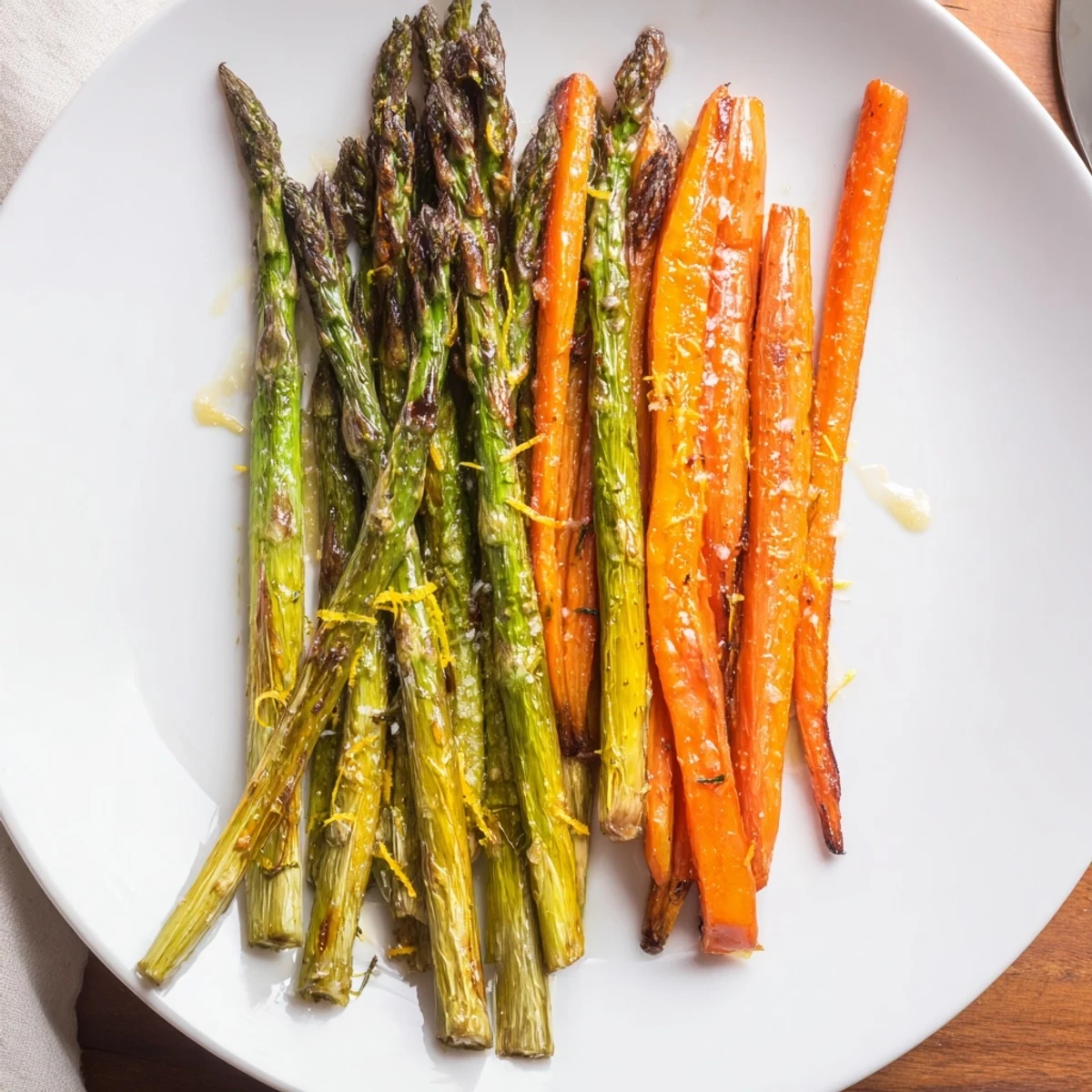
 Quick to prep and packed with bright flavor: trim asparagus and cut carrots into sticks, toss with olive oil, salt, pepper and thyme, then roast at 220°C for 20–25 minutes until tender and lightly browned. Finish with lemon zest and juice for brightness; grate Parmesan if desired. Variations include adding garlic, mixing other root vegetables, or serving alongside roasted proteins.
The sound of asparagus snapping against the cutting board and the cheerful clatter of carrot sticks always feels like a celebration of fresh produce. Early spring seems to beg for something green and bright on the table and roasting always coaxes out the sweetness in every bite. The gentle aroma of thyme mingling in a hot oven makes my kitchen feel like a little escape from the world. It’s such an easy ritual, yet the transformation never fails to delight me.
One hectic Wednesday, I put a sheet pan of these vegetables into the oven just as a friend dropped by for an impromptu chat. By the time we paused for dinner, the room was filled with herbs and citrus—she still talks about that meal as one of the most delicious surprises she’s had.
Ingredients
- Fresh asparagus: Choose spears that are bright green and snap easily, trimming off only the woody ends for the best texture.
- Carrots: Cutting them into slim sticks ensures they roast evenly and get just as tender as the asparagus without burning.
- Olive oil: Use a good quality oil for its subtle flavor which helps the veggies caramelize beautifully.
- Sea salt: A gentle sprinkle brings out all the natural tastes lurking in those veggies.
- Freshly ground black pepper: The little pops of warmth make each bite more interesting than plain old pepper from a can.
- Dried thyme or Italian herbs: Herbs make the oven do all the work—just toss them in and let the aroma fill your home.
- Lemon zest: The zest releases essential oils that hit your nose and tongue all at once, making the dish taste bright and fresh.
- Lemon juice: A quick squeeze at the end wakes up the whole pan—don’t skip it!
- Grated Parmesan cheese (optional): Adds a crisp, golden edge if you want some savory luxury—but the veggies shine on their own for a vegan plate.
Instructions
- Heat Things Up:
- Set your oven to 220°C and line a baking sheet with parchment paper so you’re not left chipping away any baked-on bits later.
- Prep Your Veggies:
- Snap or trim asparagus ends, slice the carrots into sticks, and spread both on your lined baking sheet in a single layer.
- Make It Shine:
- Drizzle everything with olive oil, then sprinkle on salt, pepper, and thyme. Toss the veggies with your hands—they should glisten and smell earthy and fresh.
- The Roast:
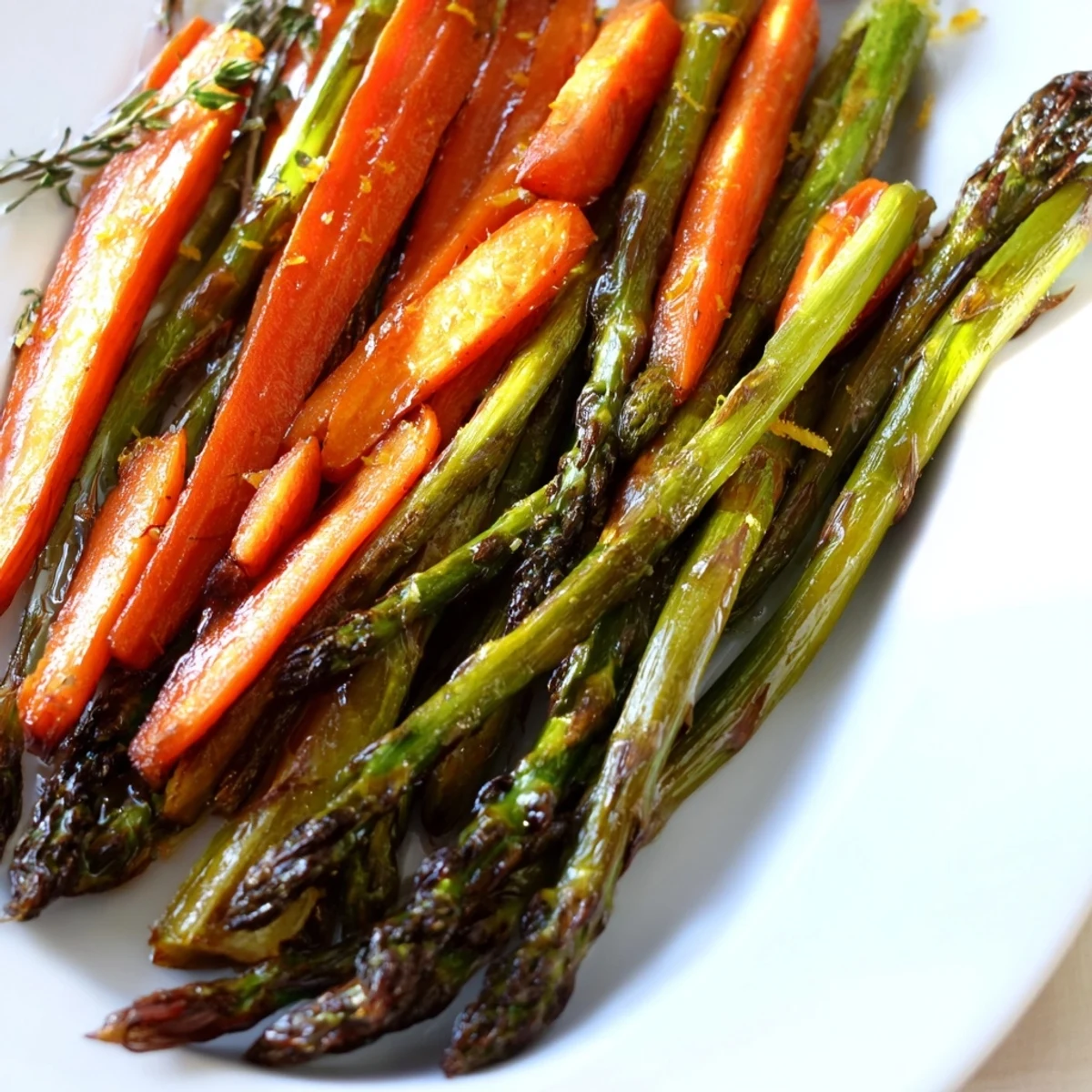
- Pop the sheet in the oven and set a timer for 20–25 minutes; halfway through, flip the veggies so they caramelize without burning and you get golden crispy edges.
- The Bright Finish:
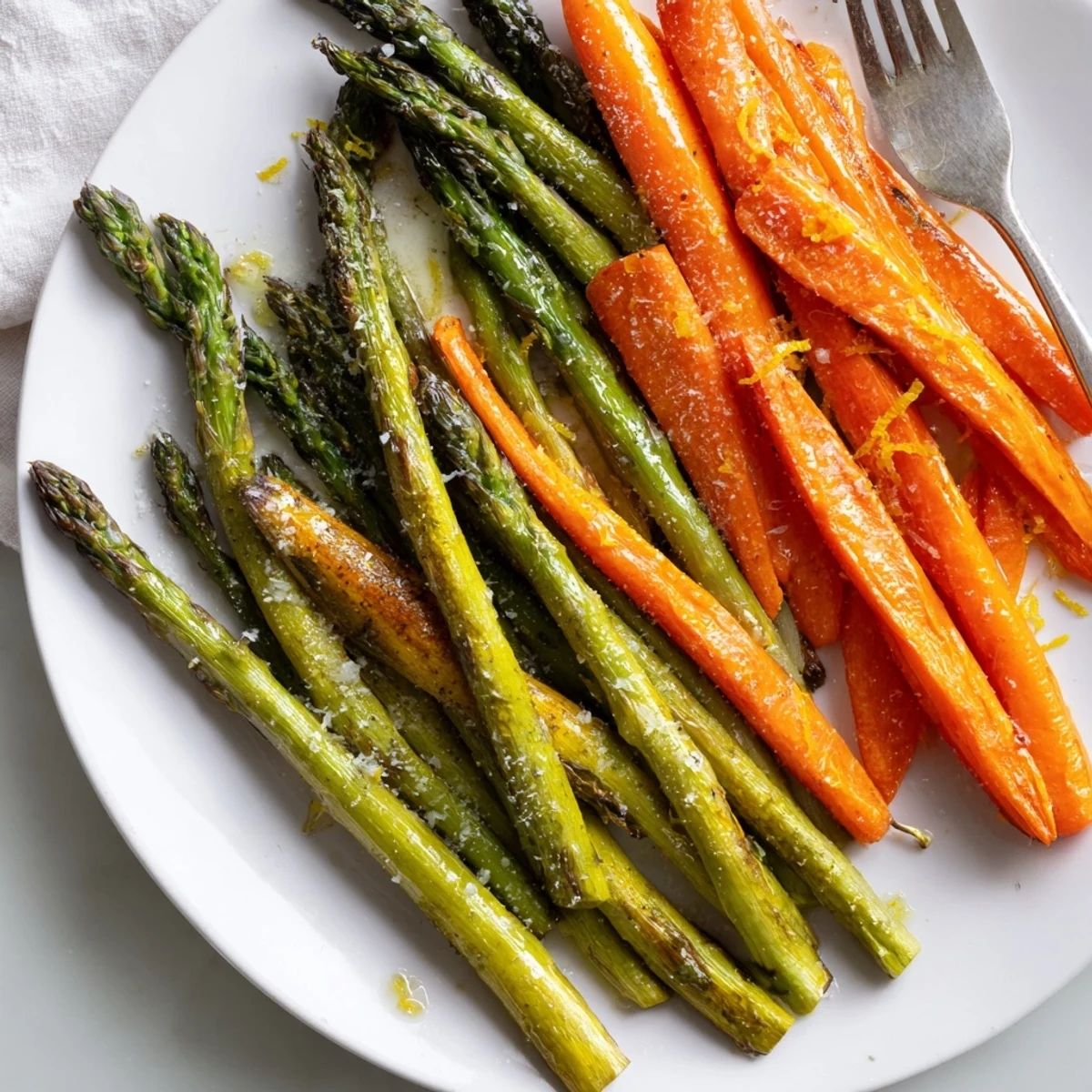
- When the asparagus and carrots are tender and just beginning to brown, quickly scatter lemon zest over them, drizzle with lemon juice, and, if you like, finish with Parmesan while everything is hot. Serve straight away for the best flavor and texture.
 Pin It
 One Sunday I tried this recipe for family lunch, unsure if the kids would touch anything green. Somehow, the hint of lemon made them eat every last spear and stick—my younger one even asked for seconds, something I’d only seen with fries!
Simple Garnish Upgrades
If you want a crowd-pleaser, it’s easy to toss in a handful of chopped parsley or chives after roasting—these add a pop of color and a fresh, grassy bite. Sometimes, I scatter toasted pine nuts for crunch or a little smoked paprika when I want warmth without turning on the heat.
Swapping Vegetables and Herbs
On chilly evenings, parsnips or sweet potatoes step in for carrots—just cut them slim so everything cooks in time. Mixing and matching herbs is half the fun; rosemary brings its own party, and dried oregano works in a pinch if you’re out of thyme.
Serving Suggestions & Quick Fixes
This dish can cozy up to roasted chicken, salmon or even a grain bowl, and leftovers mix beautifully into salads or omelets. For easy weeknights, I scoop it straight onto plates from the pan and no one seems to mind.
- If the veggie edges get too dark before they’re soft, tent the pan loosely with foil.
- Let vegetables cool just a minute on the tray so they don’t get soggy from steam.
- Don’t forget to taste for salt at the end—it can really lift the flavors.
 Pin It
 Give this vibrant side a try and your dinner table will feel sunnier in any season. Sometimes, the simplest ingredients really do taste best together.
Recipe FAQs
- → How do I choose the best asparagus?
-
Look for firm, straight stalks with tightly closed tips and vibrant green color. Thinner stalks cook faster and stay tender, while thicker stalks benefit from a brief peel at the base to avoid toughness.
- → What’s the best way to cut carrots for even roasting?
-
Slice carrots into uniform sticks about the same thickness as the asparagus to promote even cooking. If carrots are very thick, halve or quarter them lengthwise so they roast through at the same rate.
- → Can I adjust the oven time or temperature?
-
Yes. Maintain high heat (around 220°C/425°F) for browning; reduce to 200°C/400°F and add a few minutes for larger pieces. Turn vegetables halfway through roasting for even caramelization.
- → How can I keep this version vegan or dairy-free?
-
Simply omit the Parmesan or swap in a plant-based alternative. The olive oil, lemon and herbs provide plenty of flavor on their own for a dairy-free finish.
- → What’s the best way to reheat leftovers?
-
Store cooled vegetables in an airtight container in the fridge for up to 3–4 days. Reheat in a hot oven or in a skillet to refresh the texture and regain some crispness rather than microwaving, which can make them soggy.
- → Can I add garlic or other vegetables?
-
Yes. Add minced garlic in the last 5–10 minutes of roasting to avoid burning, or toss whole cloves with the vegetables from the start for mellower flavor. Root vegetables like parsnips or sweet potatoes work well but may need longer roasting time.