
 Pin It
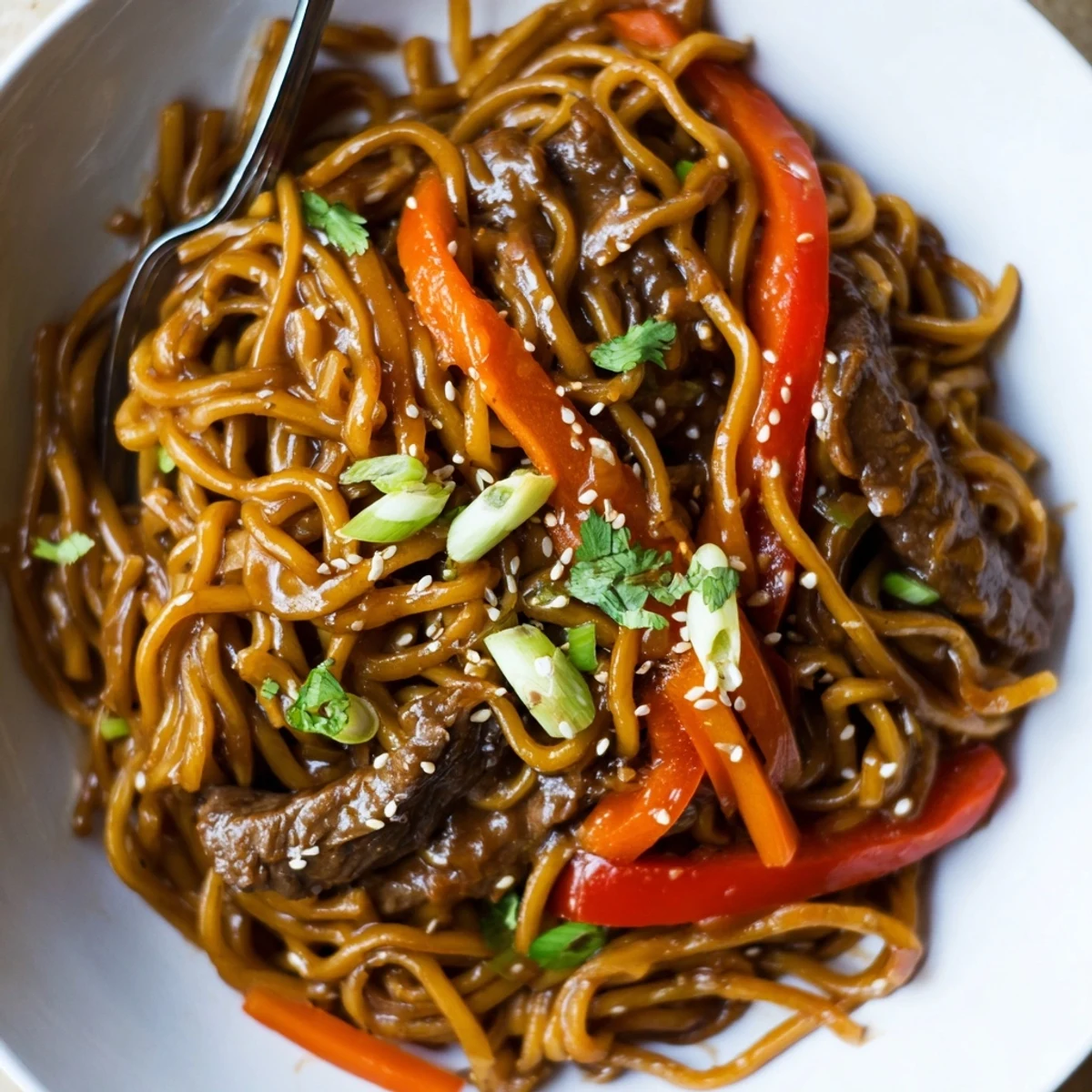
 Marinate thinly sliced beef in soy, cornstarch and sesame oil for 10 minutes to tenderize and help the glaze cling. Cook noodles until just tender and drain. In a very hot wok sear beef briefly, then remove. Stir-fry garlic, ginger and vegetables until crisp-tender, return beef and pour a hoisin-dark soy-oyster-honey sauce. Toss with noodles over high heat until glossy. Finish with sesame seeds and fresh herbs; serve immediately.
Our kitchen smelled like burnt garlic the first evening I tried to nail this dish. I had the wok screaming hot and tossed everything in at once like some kind of cowboy. What came out was a sticky, tangled mess that somehow tasted incredible. That happy accident became our go-to Tuesday dinner.
My neighbor knocked on the door one night because the smell of hoisin and ginger had drifted into her hallway. She stood there holding an empty bowl, completely unembarrassed. I served her a heap of noodles and she sat on our kitchen counter eating it without a word. That might be the best review this recipe has ever received.
Ingredients
- 400 g beef sirloin or flank steak, thinly sliced: Freezing the steak for 20 minutes makes slicing paper thin strips almost effortless.
- 2 tbsp soy sauce (marinade): This starts tenderizing the beef before it ever hits the wok.
- 1 tbsp cornstarch: Creates that velvety coating that helps the sauce cling to every strip.
- 1 tsp sesame oil: Just enough to add nutty depth without overpowering everything else.
- 1/2 tsp freshly ground black pepper: Freshly cracked makes a noticeable difference here.
- 300 g egg noodles: Fresh noodles are ideal, but dried work perfectly if you avoid overcooking them.
- 1 red bell pepper, thinly sliced: Adds color and a sweet crunch that balances the salty sauce.
- 1 carrot, julienned: Thin matchsticks cook fast and weave beautifully through the noodles.
- 3 spring onions, cut into 5 cm pieces: These soften just enough to turn sweet in the high heat.
- 2 cloves garlic, minced: The aromatic backbone of the whole stir fry.
- 1 tbsp ginger, finely grated: Grate it on a microplane so it melts right into the oil.
- 3 tbsp hoisin sauce: The sticky, sweet base that gives this dish its name.
- 2 tbsp dark soy sauce: Deeper color and richer flavor than regular soy.
- 2 tbsp oyster sauce: Brings a savory roundness nothing else can replicate.
- 1 tbsp honey: Helps the sauce caramelize and turn glossy in the wok.
- 60 ml water: Loosens the sauce so it coats instead of clumps.
- 2 tsp toasted sesame seeds: A tiny crunch on top that ties everything together.
- Fresh coriander or scallions: Bright, fresh garnish that lifts the whole bowl.
Instructions
- Marinate the Beef:
- Toss the sliced beef with soy sauce, cornstarch, sesame oil, and black pepper in a bowl. Let it sit for 10 minutes while you prep everything else.
- Cook the Noodles:
- Boil noodles according to the package, then drain and rinse briefly so they don't stick together. Set them aside.
- Mix the Sticky Sauce:
- Whisk hoisin, dark soy, oyster sauce, honey, and water in a small bowl. It should look like liquid caramel.
- Sear the Beef:
- Get your wok ripping hot, add a splash of oil, and stir fry the beef for 1 to 2 minutes until just browned. Remove it quickly so it stays tender.
- Build the Vegetables:
- Add a touch more oil, then cook garlic and ginger until the smell hits you. Toss in the bell pepper, carrot, and spring onions for 2 to 3 minutes.
- Bring It All Together:
- Return the beef, pour in the sticky sauce, and let it bubble for one minute. Everything should look glossy and coated.
- Toss in the Noodles:
- Add noodles and use tongs to toss over high heat for 1 to 2 minutes. Every strand should be shiny and sticky.
- Garnish and Serve:
- Pile into bowls and scatter sesame seeds and fresh herbs on top. Serve immediately while everything is hot.
 Pin It
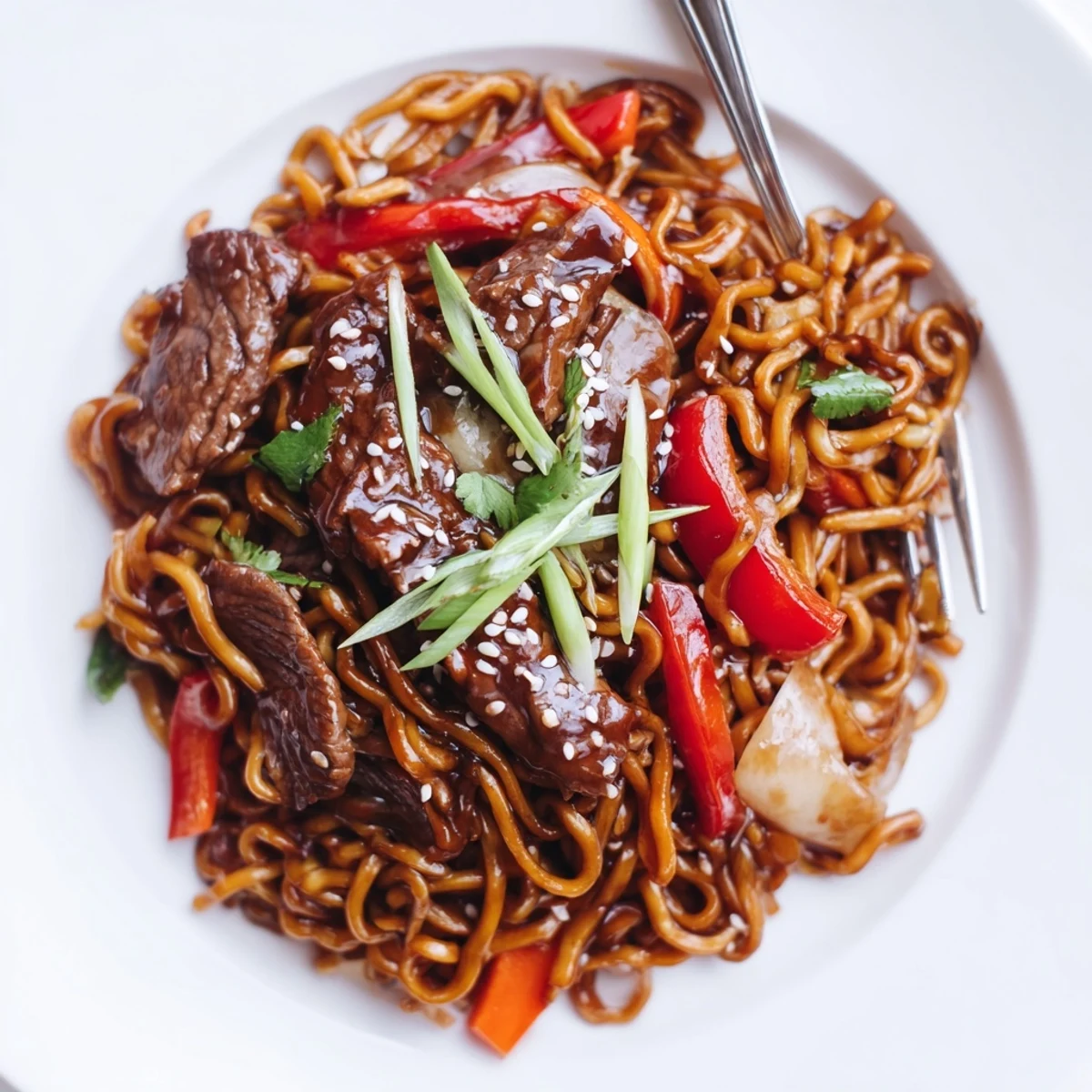
 There was a Friday when everything at work had gone sideways and I came home wanting to eat my feelings. Thirty minutes later I was sitting cross legged on the couch with a massive bowl of these noodles, sauce on my chin, genuinely smiling. Some dishes just fix things.
Swaps That Actually Work
Chicken thigh works beautifully here if you slice it thin and give it the same marinade treatment. Firm tofu is great too, just press it dry and let it get crispy before adding the sauce. For a gluten free version, swap to rice noodles and use tamari with a gluten free hoisin. The dish stays just as sticky and satisfying.
Getting the Wok Heat Right
The single biggest difference between restaurant stir fry and home stir fry is heat. Let your wok sit on high until it just barely starts to smoke before adding oil. Cook in small batches so the temperature never drops. That sizzle when the beef hits the surface is exactly what you want to hear.
Storing and Reheating Leftovers
Leftovers keep well in the fridge for up to two days in an airtight container. Reheat in a hot wok or skillet with a tiny splash of water to loosen the sauce back up. The microwave works in a pinch but you lose that slight crispness at the edges.
- Toss in a few drops of sesame oil when reheating to refresh the flavor.
- Add fresh herbs after reheating since they wilt if stored with the noodles.
- This dish does not freeze well because the noodles turn mushy when thawed.
 Pin It
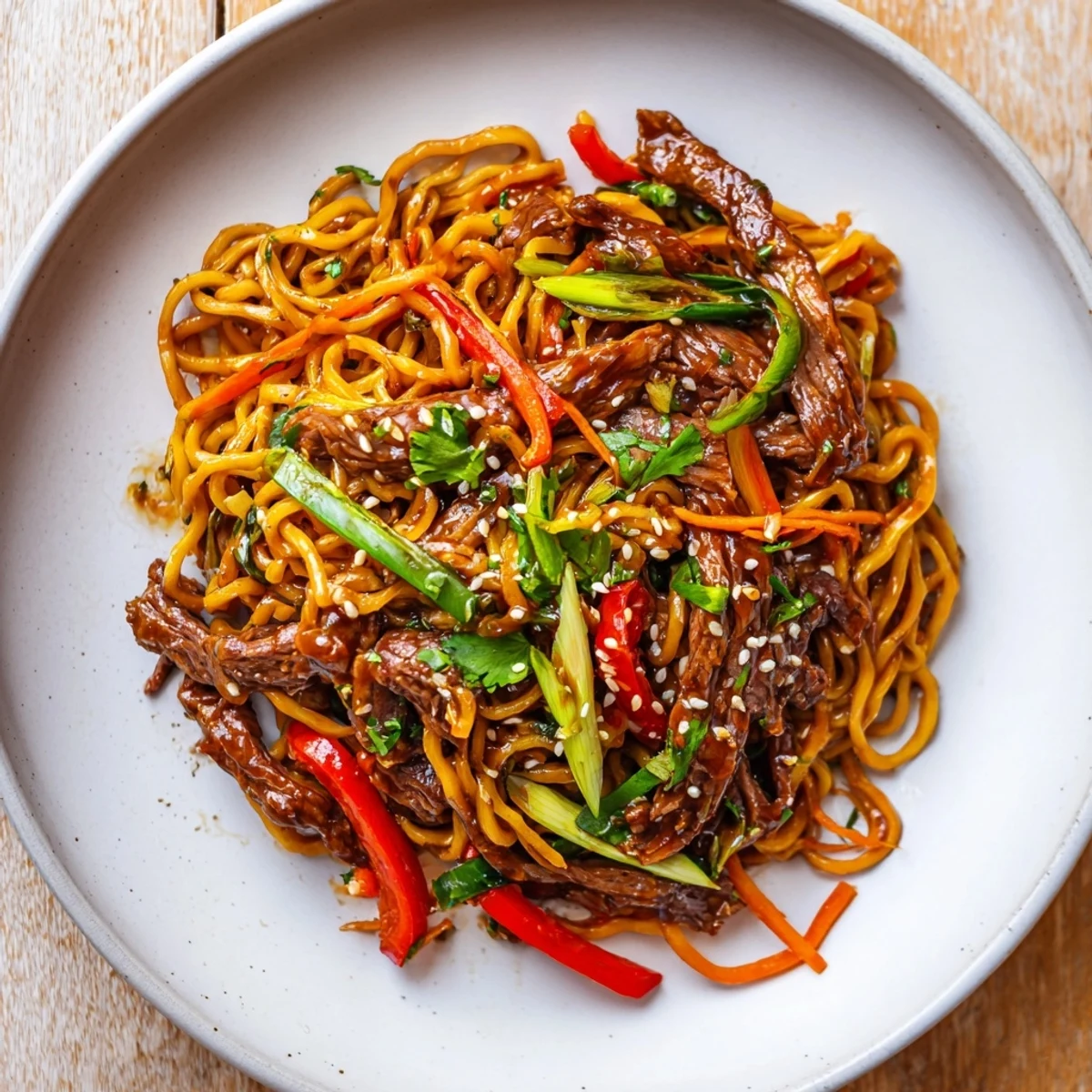
 This is one of those meals that earns a permanent spot in the rotation after a single bite. Make it once and your weeknights will thank you.
Recipe FAQs
- → How do I get a glossy, sticky sauce?
-
Use a balance of hoisin, dark soy and a touch of honey, then finish over high heat so the sauce reduces and coats the noodles. A small splash of cornstarch slurry can help it cling and thicken quickly.
- → Which noodles work best?
-
Fresh egg noodles give a chewy bite and absorb sauce well, but dried egg noodles or rice noodles (for gluten-free) are good alternatives—cook until just tender to avoid soggy results.
- → How can I keep the beef tender?
-
Slice against the grain and marinate briefly with soy and cornstarch; cook the beef quickly over very high heat until just browned, then remove while you stir-fry the vegetables to avoid overcooking.
- → Can I make this gluten-free?
-
Yes. Choose rice noodles and replace soy, hoisin and oyster sauces with certified gluten-free alternatives. Check labels carefully for hidden wheat-containing ingredients.
- → How do I prevent watery noodles?
-
Drain noodles thoroughly and toss them in a little oil after cooking to prevent clumping. Add them to the wok over high heat so excess moisture evaporates and the sauce sticks.
- → What are good protein substitutions?
-
Try thinly sliced chicken, pork or firm tofu. Adjust cooking time: tofu needs less searing and benefit from a light pan-fry first to develop color.